
Maruti Alto 800 : Maruti Alto 800 may have bowed out of showrooms, but its name still echoes in every Indian lane where budget wheels changed lives.
Launched as the spiritual successor to the iconic Maruti 800, this tiny hatch ruled entry-level sales charts for years before stricter emission norms and shifting buyer tastes pushed it into retirement in 2023.
Even in 2025, YouTube videos, used-car portals and social media reels keep the Alto 800 relevant, while its legacy now lives on through the Alto K10 and other small Maruti hatches.
From Budget Dream to Mass Phenomenon
When the Alto 800 arrived, it cleverly blended the familiarity of the original Alto with a fresher design, slightly more power and a price tag low enough to tempt two-wheeler owners into four-wheel safety.
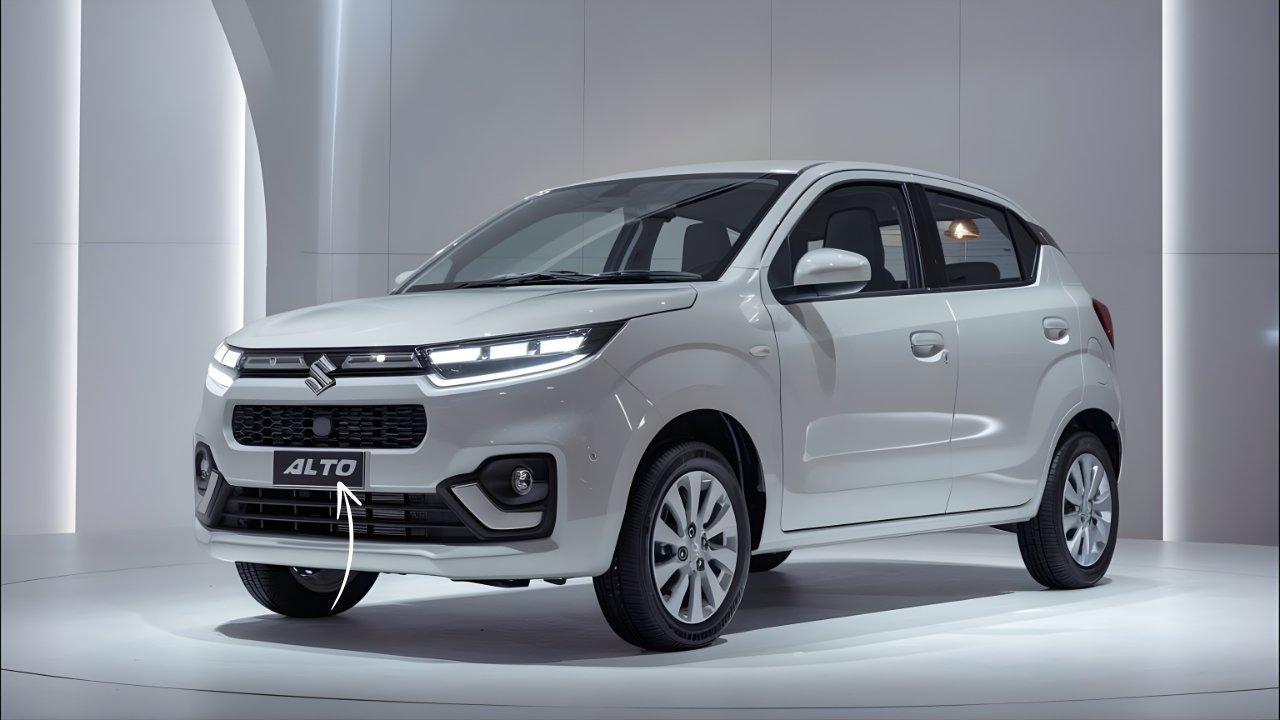
Its 796 cc three-cylinder petrol engine produced around 47 bhp and 69 Nm, but what really sold it was mileage hovering above 22 kmpl and even higher on CNG, keeping monthly fuel bills gentle.
For first-time car buyers in small towns and crowded metros alike, the Alto 800 felt like the natural, no‑nonsense family upgrade.
Sales figures over the years underline just how important the Alto family became: by 2023, Maruti Suzuki announced that the Alto line had crossed the 45‑lakh unit milestone, cementing its “people’s car” status well beyond just one generation.
The 800 made up a significant chunk of that volume, often topping monthly sales charts and becoming India’s best-selling car for multiple consecutive years.
Why Production Stopped After Two Decades
Despite its popularity, the writing was on the wall as emission and safety norms tightened. The Alto 800 never received an upgrade to meet the latest BS6 Phase 2 emissions, and Maruti finally discontinued it in early 2023, confirming that production had stopped and the model was off the official price list.
Executives pointed out that the entry‑level hatchback segment itself was shrinking as costs rose and many customers began preferring slightly larger, better-equipped cars, even at a higher ticket price.
Another factor was portfolio overlap. Maruti had already reintroduced the Alto K10 with a more modern 1.0‑litre K‑Series engine and newer safety kit, making it a natural successor in the showroom while helping the brand meet corporate average fuel economy and emission targets more efficiently.
For Maruti, focusing on a newer platform and engine made more sense than re‑engineering the ageing 800‑cc motor.
Alto 800 vs Alto K10: Old Faithful and New Guard
On paper, the Alto 800 and Alto K10 served similar customers but with different priorities. The 800 offered extreme affordability, simple mechanicals and excellent mileage, while the K10 brought a more powerful 998 cc engine, higher power output (around 67 bhp), crisper performance and slightly richer features.
Reviews of the K10 regularly describe it as the “perfect replacement” for the Alto 800, especially for buyers who wanted better highway confidence and modern hardware without giving up compact dimensions.
However, many existing owners still remember the 800 fondly for its low maintenance costs and forgiving nature. For them, the K10 feels more sophisticated, but the uncomplicated charm of the Alto 800—its easy city manoeuvrability, light controls and legendary frugality—remains unmatched in emotional terms.
Used Car Market: The Alto 800 Lives On
Discontinuation hasn’t dented demand in the used market; if anything, it has added urgency.
Used‑car platforms list hundreds of Alto 800 units in cities like Delhi, NCR and Faridabad, with prices ranging roughly from under ₹1 lakh for older high‑mileage examples to ₹3–4 lakh for late‑run, low‑kilometre cars.
Certified channels like Maruti Suzuki True Value also actively trade Alto 800s, marketing them as reliable first cars with known service histories and abundant spare-part availability.
For budget-conscious buyers, especially in smaller towns, a pre‑owned Alto 800 still makes a lot of sense:
- Low running costs due to fuel efficiency and cheap spares.
- Simple mechanicals that any roadside mechanic can handle.
- Proven reliability in harsh conditions and poor roads.
The main compromises remain limited cabin space, basic safety by modern standards and the absence of features like advanced infotainment or automatic transmissions.
Safety, Equipment and the Changing Norms
In its later years, the Alto 800 gained basics like driver airbag (and optional passenger airbag), ABS and rear parking sensors, but it still sat below the newer crop of hatchbacks in terms of crash protection.
With India progressively tightening crash and pedestrian safety requirements, it became increasingly difficult to keep ultra‑low‑cost models viable without substantial re‑engineering, which would have pushed prices up and undercut the Alto 800’s greatest strength.
That changing safety landscape partly explains why Maruti’s newer products and facelifts focus more heavily on structural integrity, multiple airbags and ESP—even at the lower end of the market—while older platforms quietly exit.
Legacy and the Talk of a “Return”
Social media and YouTube are full of “new Alto 800 2025” clips and posts claiming that Maruti will bring back the nameplate with a radical facelift, ultra‑high mileage figures and sub‑₹3‑lakh pricing.
Many of these are clearly speculative or clickbait, built around fan renders or generic micro‑car rumours rather than official announcements.
As of late 2025, Maruti’s official channels focus on the Alto K10 and other Arena models; there is no confirmed new‑gen Alto 800 on sale.
That said, the idea of a hyper‑efficient, ultra‑compact city car has not lost relevance, especially as fuel prices stay high and congestion worsens.
Industry watchers often argue that if Maruti does launch another entry‑level hatch in the future, it might carry a different name or use a newer small‑car platform, but the spirit of the Alto 800—affordability, simplicity and low running cost—will remain its guiding force.
What the Maruti Alto 800 Still Means to India
For millions of Indian families, the Alto 800 was not just a car; it was the first set of four wheels that changed how they travelled, worked and celebrated.
It showed that reliable, economical motoring could be within reach of scooter buyers and small‑town households, while teaching an entire generation to drive and maintain their own cars.
Today, even as showrooms move on to K10s, SUVs and hybrids, the sight of an Alto 800 squeezing through traffic or parked outside a small shop is a reminder of how deeply it shaped India’s automotive story.
2026 Chevrolet Bel Air Revival his first look – features is luxury and comfort
Its journey from “most affordable” to “fondly remembered” might be complete, but on the roads and in the used‑car marketplace, the Alto 800’s chapter is far from closed.